
Drone Propulsion Systems
Expert-defined terms from the Certified Specialist Programme in Drone Maintenance and Repair course at LearnUNI. Free to read, free to share, paired with a professional course.
Drone Propulsion Systems #
Drone Propulsion Systems refer to the mechanism responsible for generating thrus… #
These systems are crucial components of drones, as they enable controlled flight and maneuverability. There are several types of propulsion systems used in drones, each with its own advantages and limitations.
Electric Motors #
Electric Motors are commonly used in drone propulsion systems due to their effic… #
These motors convert electrical energy into mechanical energy to drive the propellers, generating thrust. Electric motors are lightweight and compact, making them ideal for drones. They are also easy to control, allowing for precise adjustments in flight.
Brushless Motors #
Brushless Motors are a type of electric motor commonly used in drone propulsion… #
Unlike brushed motors, brushless motors do not have physical brushes that wear out over time, making them more durable and efficient. Brushless motors provide higher power-to-weight ratios, resulting in improved performance and longer flight times for drones.
Propellers #
Propellers are rotating blades that generate thrust by creating a pressure diffe… #
They are attached to the motors and spin rapidly to propel the drone forward or upward. The size, pitch, and number of propeller blades can affect the drone's performance, including speed, agility, and payload capacity.
Fixed #
Pitch Propellers:
Fixed #
Pitch Propellers have a fixed angle of attack and cannot be adjusted during flight. They are simple in design and cost-effective, making them suitable for beginner drones or lightweight models. Fixed-pitch propellers provide a constant level of thrust but may lack efficiency compared to variable-pitch propellers.
Variable #
Pitch Propellers:
Variable #
Pitch Propellers have blades that can change their angle of attack during flight. This feature allows for greater control over thrust output and efficiency, as the propeller can adjust to changing flight conditions. Variable-pitch propellers are often used in more advanced drones that require precise maneuvering or variable speed capabilities.
Thrust Vectoring #
Thrust Vectoring is a technology that allows the direction of thrust to be alter… #
By adjusting the angle of the motor or propeller, thrust vectoring can change the drone's pitch, roll, and yaw without the need for additional control surfaces. This technology is commonly used in advanced drones for enhanced agility and stability.
Multirotor Systems #
Multirotor Systems are a type of drone propulsion system that utilizes multiple… #
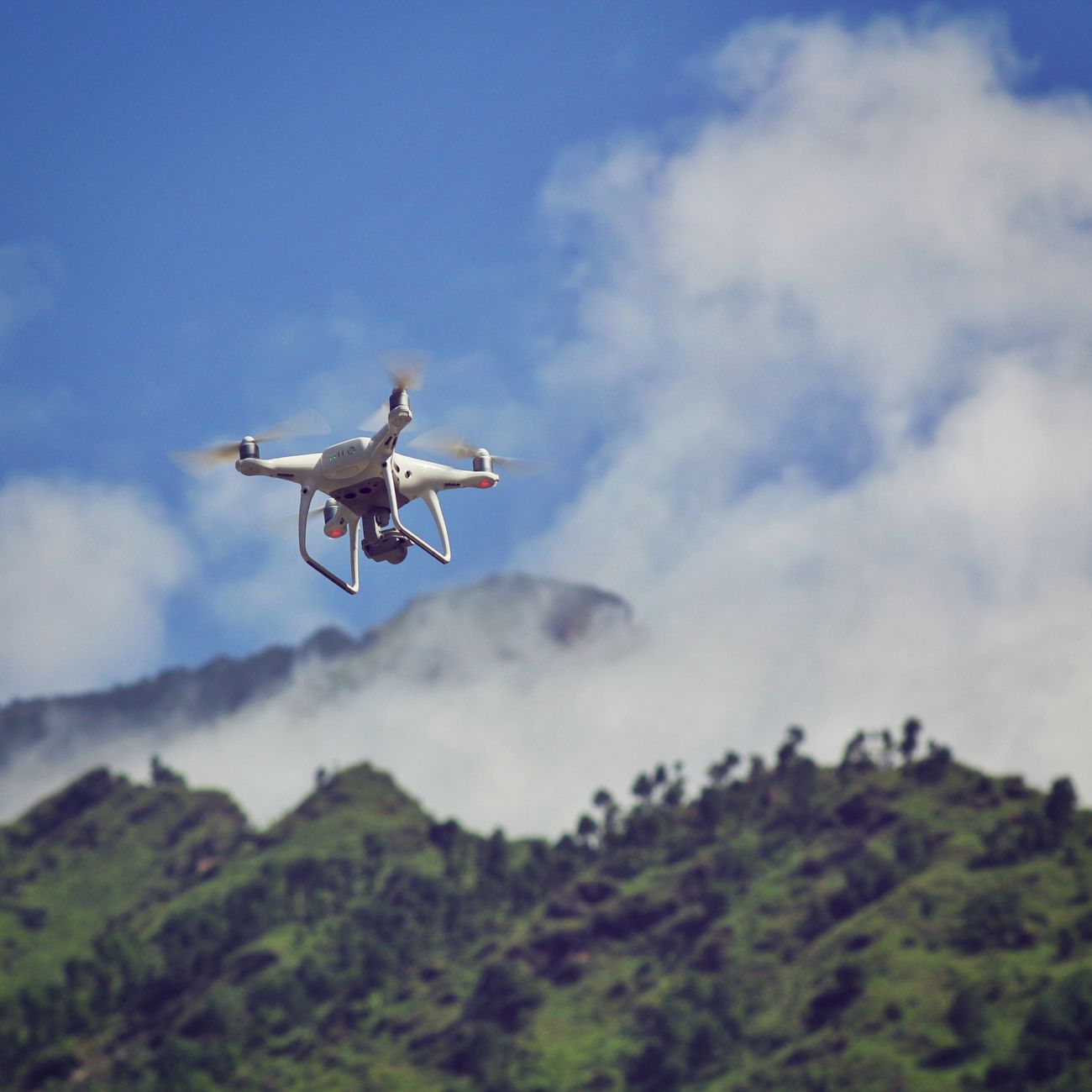
The most common configurations are quadcopters (four motors), hexacopters (six motors), and octocopters (eight motors). Multirotor systems offer simplicity, stability, and redundancy, making them popular for various applications, including aerial photography, surveillance, and delivery.
Quadcopter #
A Quadcopter is a type of drone with four motors and propellers arranged in a sq… #
Each motor is paired diagonally with another, allowing for precise control over pitch, roll, and yaw. Quadcopters are popular for recreational and commercial use due to their simplicity, stability, and maneuverability.
Hexacopter #
A Hexacopter is a type of drone with six motors and propellers arranged in a hex… #
Hexacopters offer increased lift capacity and redundancy compared to quadcopters, making them suitable for carrying heavier payloads or operating in challenging environments. Hexacopters are commonly used in professional photography, agriculture, and search and rescue missions.
Octocopter #
An Octocopter is a type of drone with eight motors and propellers arranged in an… #
Octocopters provide even greater lift capacity and redundancy than hexacopters, allowing for more stable flight and increased safety. Octocopters are often used for heavy-lift applications, such as cinematography, mapping, and industrial inspections.
Single #
Rotor Systems:
Single #
Rotor Systems are a type of drone propulsion system that utilizes a single motor and a large rotor to generate lift. These systems are commonly found in traditional helicopters but are less common in drones due to their complexity and mechanical requirements. Single-rotor systems offer longer flight times and higher speeds compared to multirotor systems but are more challenging to operate.
Collective Pitch System #
A Collective Pitch System is a mechanism used in single #
rotor drones to control the angle of the rotor blades collectively. By adjusting the pitch of all blades simultaneously, the drone can change altitude or generate thrust. Collective pitch systems provide precise control over lift and maneuverability, allowing for advanced flight maneuvers such as autorotation and inverted flight.
Tail Rotor #
A Tail Rotor is a small rotor mounted on the tail of a helicopter or single #
rotor drone to counteract the torque produced by the main rotor. The tail rotor generates thrust in the opposite direction to the main rotor, preventing the drone from spinning uncontrollably. Tail rotors are essential for maintaining stability and yaw control in single-rotor systems.
Gasoline Engines #
Gasoline Engines are internal combustion engines that burn gasoline to generate… #
These engines are commonly used in larger drones or unmanned aerial vehicles (UAVs) that require extended flight times and high speeds. Gasoline engines offer high power output and energy density but are heavier and more complex than electric motors.
Turbine Engines #
Turbine Engines are gas #
powered engines that use a turbine to convert fuel into mechanical energy for propulsion. These engines are commonly found in jet-powered drones or military UAVs that require high speed and altitude capabilities. Turbine engines offer exceptional power-to-weight ratios and efficiency but are expensive and require specialized maintenance.
Hybrid Systems #
Hybrid Systems combine multiple propulsion methods, such as electric motors and… #
By utilizing the strengths of each system, hybrid drones can achieve longer flight times, higher speeds, and increased payload capacities. Hybrid systems are becoming more common in commercial drones for applications that demand versatility and reliability.
Thrust #
to-Weight Ratio:
The Thrust #
to-Weight Ratio is a measure of the drone's ability to generate lift relative to its total weight. It is calculated by dividing the total thrust output of the propulsion system by the drone's mass. A higher thrust-to-weight ratio indicates better performance, agility, and maneuverability, allowing the drone to accelerate quickly, climb steeply, or carry heavier payloads.
Flight Controller #
A Flight Controller is a electronic device that manages the drone's flight dynam… #
It receives input from sensors such as accelerometers, gyroscopes, and GPS and adjusts the motor outputs to control the drone's position and movement. Flight controllers are essential for autonomous flight, waypoint navigation, and stabilization during windy conditions.
ESC (Electronic Speed Controller) #
An Electronic Speed Controller is a device that regulates the speed and directio… #
ESCs receive signals from the flight controller and adjust the voltage and current supplied to the motors to control their rotation speed. High-quality ESCs are essential for smooth and responsive flight performance, as they directly influence the drone's responsiveness and efficiency.
BEC (Battery Eliminator Circuit) #
A Battery Eliminator Circuit is a voltage regulator that provides a constant pow… #
BECs are typically integrated into ESCs or flight controllers and convert the higher voltage of the main battery to the lower voltage required by the electronics. BECs ensure consistent power delivery to critical systems, preventing voltage drops or brownouts during flight.
Flight Modes #
Flight Modes are pre #
programmed settings that dictate how the drone responds to pilot inputs or external conditions. Common flight modes include Manual (direct pilot control), Stabilize (self-leveling and altitude hold), Altitude Hold (maintaining a constant altitude), and GPS Hold (position hold using GPS coordinates). Flight modes allow pilots to adapt the drone's behavior to different scenarios or skill levels, enhancing control and safety.
Fail #
Safe Systems:
Fail #
Safe Systems are mechanisms designed to prevent or mitigate potential failures in drone propulsion systems. These systems can include features such as Return-to-Home (RTH) functionality, Low-Voltage Protection, Motor Redundancy, and GPS Signal Loss Recovery. Fail-safe systems are critical for ensuring the safe operation of drones and minimizing the risk of accidents or crashes due to mechanical or electrical issues.
Telemetry #
Telemetry is the transmission of real #
time data from the drone to the ground control station or pilot. This data can include information on battery voltage, GPS coordinates, altitude, speed, and system status. Telemetry systems allow pilots to monitor the drone's performance and health remotely, enabling informed decisions and preventive maintenance. Telemetry is essential for safe and efficient drone operations, especially in long-range or autonomous missions.
Remote Control #
A Remote Control is a handheld device used to pilot the drone and send commands… #
Remote controls typically feature joysticks, switches, and buttons to control throttle, pitch, roll, and yaw. Advanced remote controls may have built-in LCD screens, telemetry displays, and customizable settings for different flight modes or functions. The remote control is a primary interface between the pilot and the drone, providing intuitive and precise control over flight maneuvers.
Ground Control Station (GCS) #
A Ground Control Station is a centralized system used to monitor and control dro… #
GCSs can consist of computer software, hardware consoles, and communication interfaces that provide real-time telemetry, video feeds, and mission planning tools. Ground control stations enable pilots to track the drone's position, status, and performance, as well as communicate with other team members or air traffic control.
Payload #
The Payload is any additional equipment or cargo carried by the drone during fli… #
The payload capacity of a drone is determined by its propulsion system, battery life, and structural design. Payloads can vary in size and weight depending on the drone's intended application, from lightweight cameras for aerial photography to heavy-duty sensors for mapping or surveillance.
Challenges #
Drone Propulsion Systems face several challenges that can impact performance, re… #
These challenges include battery limitations (such as energy density and flight time), motor efficiency (heat dissipation and power output), propeller design (noise, vibration, and efficiency), and system integration (ESC compatibility, wiring complexity). Overcoming these challenges requires innovative solutions, such as advanced materials, aerodynamics, and control algorithms.
Regulations #
Regulations governing drone propulsion systems vary by country and jurisdiction,… #
These regulations may cover aspects such as maximum flight altitude, airspace restrictions, pilot licensing, and equipment standards. Compliance with regulations is essential for legal and safe drone operations, as violations can result in fines, penalties, or even criminal charges. Pilots and maintenance technicians must stay informed of the latest regulations to ensure compliance and avoid legal consequences.
Training #
Training in drone maintenance and repair is essential for professionals working… #
Certified specialist programs provide comprehensive education on drone components, systems, maintenance procedures, troubleshooting techniques, and safety protocols. Hands-on training with real drones, simulators, and test equipment is crucial for developing practical skills and experience. Continuous learning and certification renewal are necessary to stay up-to-date with technological advancements and industry standards in drone maintenance and repair.
Emerging Technologies #
Emerging technologies in drone propulsion systems are driving innovation and exp… #
These technologies include Artificial Intelligence (AI) for autonomous flight, Machine Learning for predictive maintenance, LiDAR for obstacle detection, and Hydrogen Fuel Cells for extended flight endurance. By embracing emerging technologies, drone maintenance specialists can enhance performance, efficiency, and safety in drone operations.
Conclusion #
Drone Propulsion Systems play a critical role in the functionality and performan… #
Understanding the components, operation, and challenges of drone propulsion systems is essential for drone maintenance and repair specialists to ensure safe and efficient operations. By mastering the principles of electric motors, propellers, flight controllers, and fail-safe systems, professionals can enhance the reliability, longevity, and performance of drones for a wide range of applications. Continuous training, certification, and awareness of emerging technologies are key to staying competitive and compliant in the rapidly evolving field of drone maintenance and repair.